SUBCTRLCase study · Internal product · 2026
Nobody could tell me what we spend on software.
A 150-person tech company trusted me to find out, on my own. Before designing anything, I had to prove the problem was real.
Design toolowner ?
Chatrenews ?
Video callsadmin left
Docspaid by ?
Scroll
ChapterProblem validation
01
Before building anything, find out if the problem is real.
Step 1The riskiest assumption
A real pain exists in how companies handle software spend, ownership and cancellation. It is shared across roles, big enough to matter, and people describe it the same way without being asked.
There is a real problem to build into. Keep going.
No product finds traction, however well it is built. Stop here.
So this gets tested first. Not the UI.
Step 2The test card
Written down before the first interview.
Experiment 01 · Problem validation
- Hypothesis
- If I ask people across finance, admin, engineering, leadership and IT open questions about how they handle software spend, most will describe the same problem in their own words.
- Method
- Semi-structured interviews30 minutes each. No product shown. No leading questions.
- Who
- 13 people, 5 rolesFinance, admin, engineering, leadership, IT.
- Pass bar
- 8 of 13Name the core problem without being asked.
- Timebox
- 1 weekThen decide: keep going or stop.
Planned 10 interviews. Ran 13.
The bar scaled with it.
Step 3Thirteen conversations
12/13
Named it unprompted · pass
Each square is one interview. Dark: described the core problem without being asked.
Step 4What came back
The pain wasn’t rare. It was everywhere.
Persevere12 of 13 · bar was 8
Step 5Decision
The problem is real. Keep going.
A few people talked to colleagues before their session, so not everyone came in cold. The pain came through anyway. When someone has had time to think and still says “I don’t know what we’re paying for”, the problem is real.
Caveat logged, not hidden.
ChapterSynthesis
02
What thirteen people actually said.
Insight 1Learned helplessness
They knew. They’d just stopped fighting it.
Nobody was surprised by the topic. One person ran a four-hour reconciliation every month. Another kept a vendor doc everyone knew was out of date. The product didn’t need to create urgency. It had to beat years of workarounds.
4hours, every month,
reconciling cards by hand.
One person. Accepted as normal.
Insight 2Cancelling is emotional
“It’s like playing octopus. Reaching out to many different places just to get a clear picture.”
- Card statements
- Inboxes
- Spreadsheets
- Chat threads
- Invoices
- Contracts
- Vendor doc
- People’s heads
“Evil design. Make it easy to subscribe, impossible to leave.”
From the interviews · names withheld
Pro plan$49 / month
Renews automatically. Try leaving.
Insight 3The biggest surprise
The vendor doc listed one owner. The work belonged to three people.
One interviewee kept private notes on who really ran each tool. Once named, it explained friction from other interviews: logins tied to people who had left, nobody to ask, tools nobody owned.
Step 6Assumption map
52 assumptions on the wall. The interviews backed 13.
Backed by evidence 13
- Ghost accounts after offboarding are nearly universal.
- Nobody formally owns vendor management at department level.
- Finance always finds out about spend after it happened.
Still a bet 39
- Department heads will accept that finance can see their tools.
- Seeing total yearly spend in the first session creates an activation moment.
- A department admin invited by finance comes back on their own.
The riskiest bet became Experiment 02.
PersonaFinance
Donna
Controls the money.
Doesn’t pick the tools.
The last line of defence, with no shield. Always reporting last month.
- 30 errors a month to fix
- Invoices arrive without contracts
- Pays penalties she didn’t know existed
PersonaDepartment admin
Alex
Picks the tools.
Doesn’t control the money.
Guilt mixed with helplessness. Answers for costs he didn’t choose.
- Inherited tools from past teams
- Trials expire unnoticed
- Charged after cancelling
The gap between them is where the waste lives.
ChapterBuild & test
03
Then I built it, and let people push back.
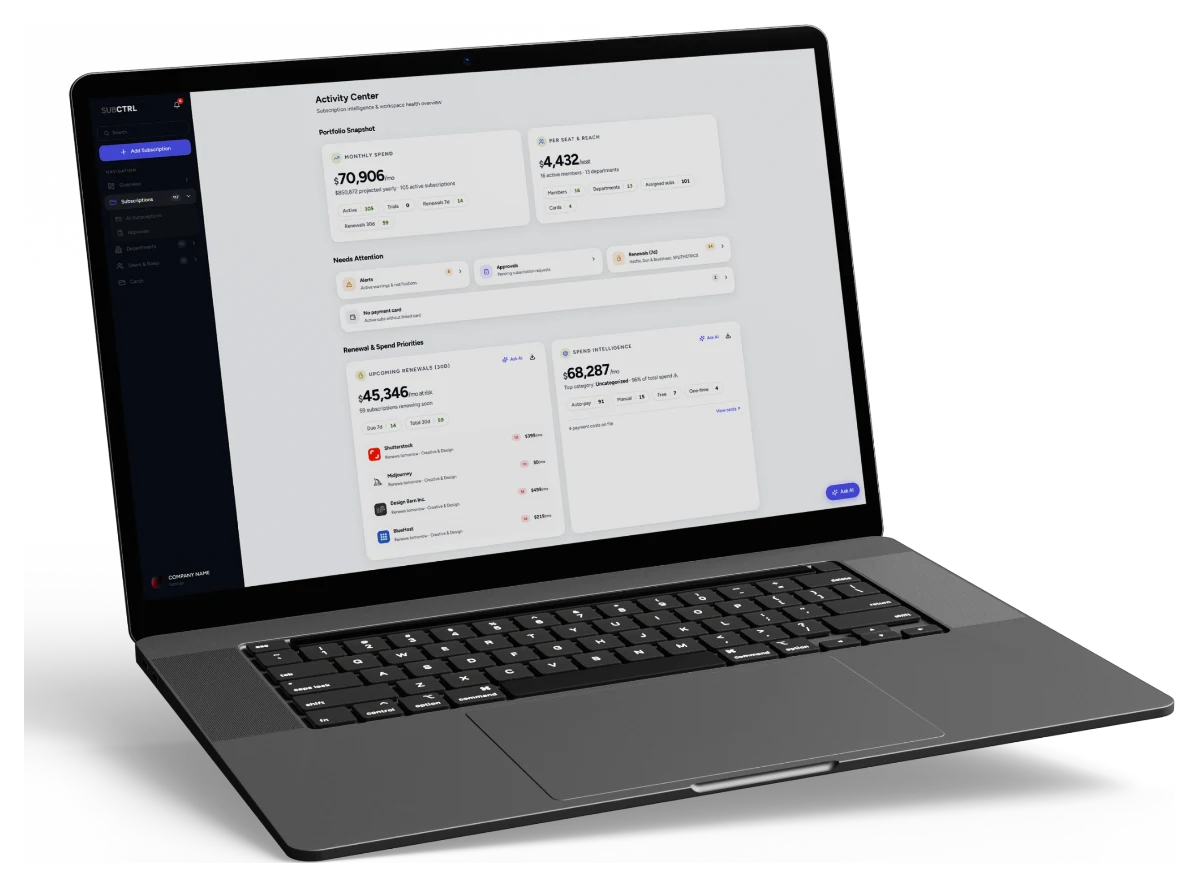
ProductFrom finding to front door
Every recurring charge in one place. And the exact cost of leaving.
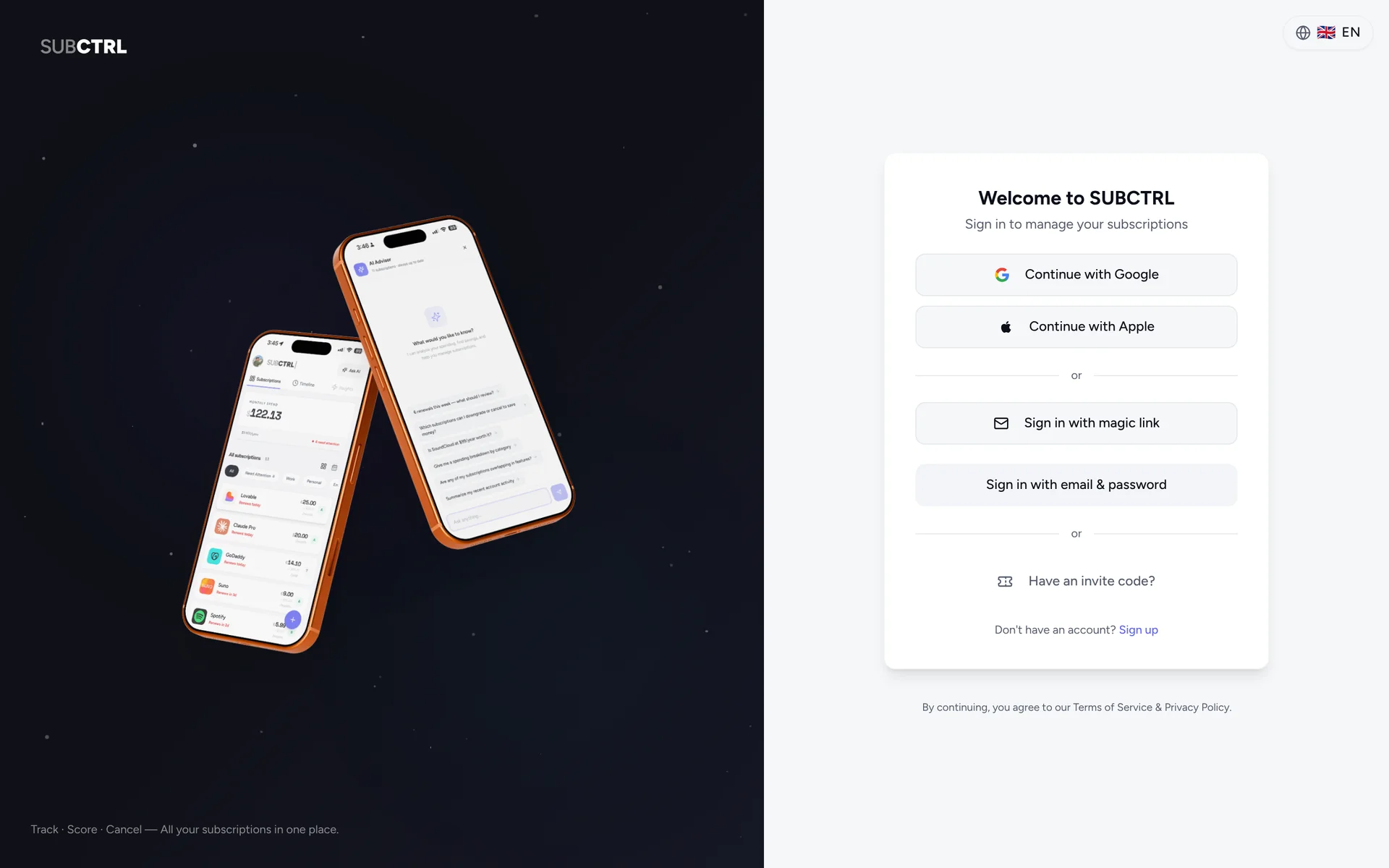
It started as an internal tool. The same model became a product site for people outside the company.
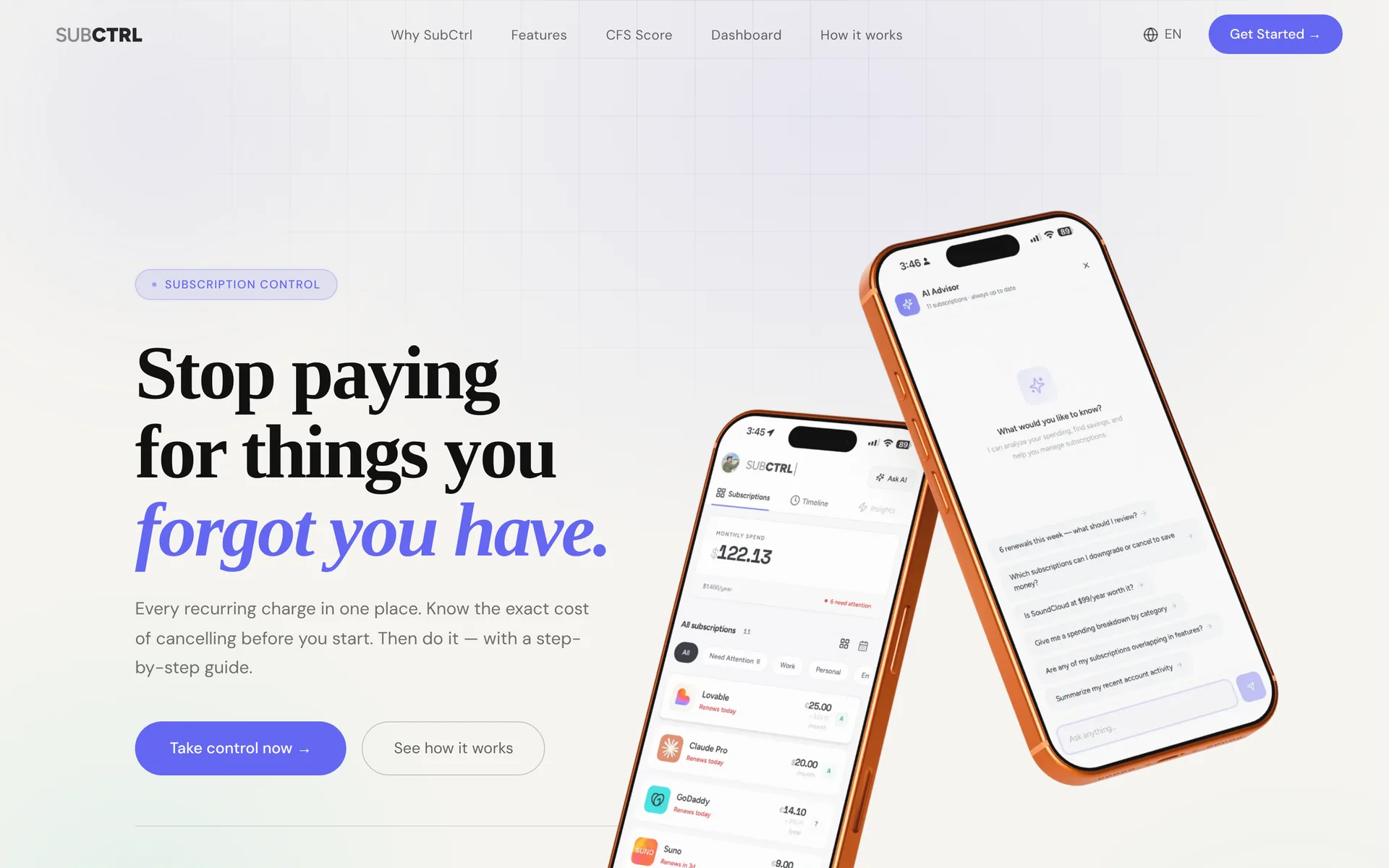
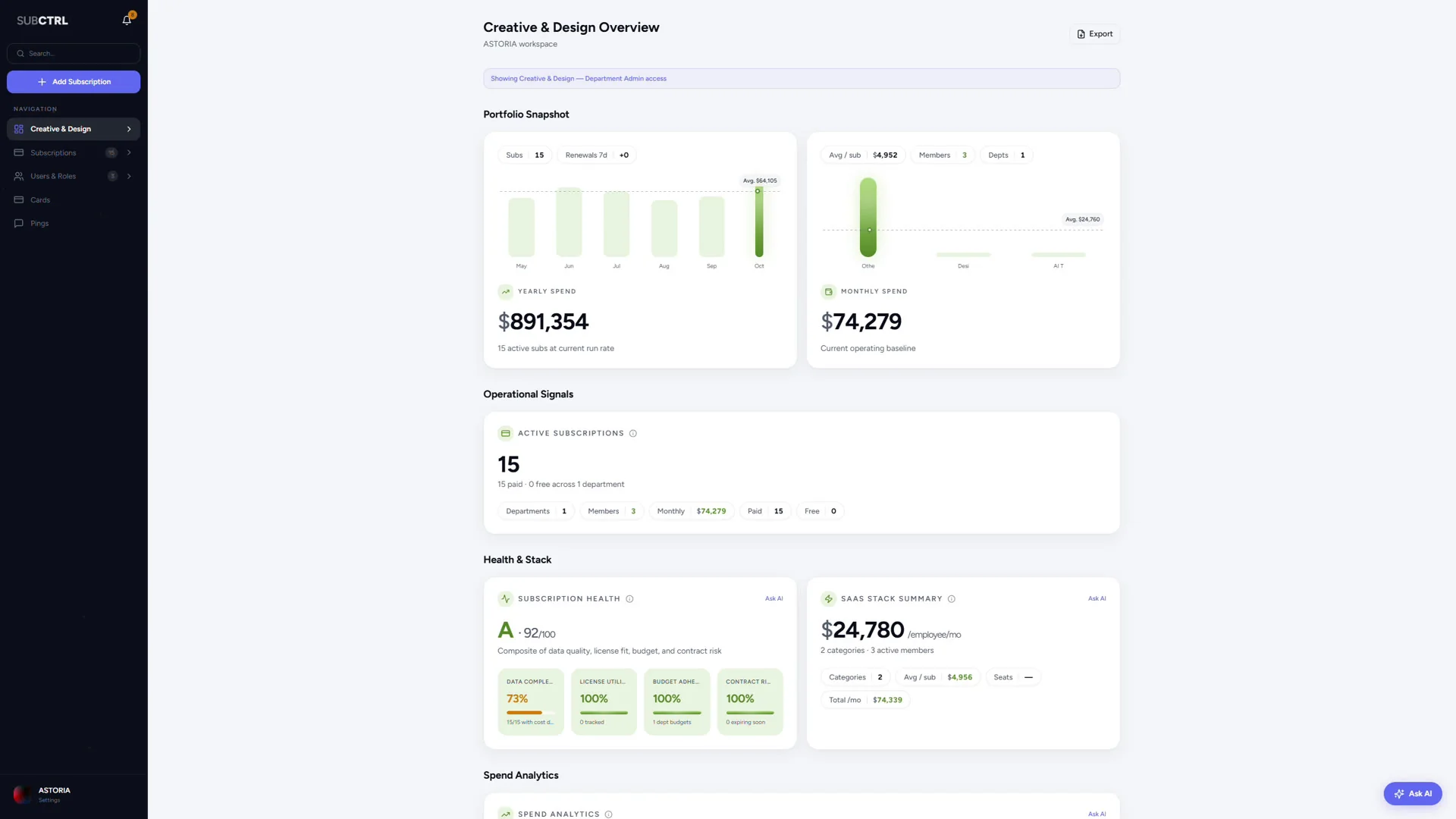
BuildWorking prototype
Each role sees only what it owns.
- Seven roles, each with its own view
- Owner, Admin and Billing contact on every service
- Eight alerts: renewals, budgets, idle seats
- Approval gate for new spend above a threshold
- Cancellation guide grading services A to F
- Real data model, not a click-through
Built with AI tools. Every decision mine.
PushbackFeedback sessions
“I still need to manually do a lot of the job.”
“Even if you get notifications, they maybe won’t react to them.”
Engineering lead · feedback session
Notifications 0
- RenewalDesign tool renews in 3 days
- BudgetTeam budget 80% used
- Seats7 seats unused this month
- TrialTrial converts tomorrow
- RenewalVideo calls renews Friday
- ApprovalNew tool waiting for approval
Read: 0
Alerts weren’t the answer. Getting people in was.
NextExperiment 02 · designed
Would people come in on their own?
If finance invites department admins into a view of only their own tools, 6 of 10 log in within 7 days and come back within 14. No demo, no walkthrough.
Measured on feel, understanding, usefulness, recommendation and trust. Did the invite feel like help, or a check-up?
Target · 6 of 10 · never measured
Day 7Logged in?
Day 14Came back?
- Discovery
- Synthesis
- Prototype
- Feedback
- Pilot
Outcome
The pilot needed one developer part-time and a sponsor in leadership. It was declined: no resources, and the company changed focus. Experiment 02 was designed, never run.
ContactWant the rest of the story?